A Sharp Tool for Community Development
For the past 35 years, members of FHLBank Boston seeking to support housing production and renovations, transform decaying buildings into thriving businesses, or assist with economic development and capital improvements in lower-income neighborhoods have turned to FHLBank Boston’s Community Development Advance (CDA) program.
Earlier this year, FHLBank Boston adjusted the CDA program to provide members with even more flexibility when accessing this discounted fixed-rate financing program. The maximum program funding per member increased from $50 million to $150 million per calendar year, and the minimum tenor for CDA advances was shortened from one year to six months.
But even before these enhancements were implemented, members like Bath Savings Institution and Bangor Savings Bank in Maine, Institution for Savings in Newburyport in Massachusetts, and BankNewport in Rhode Island realized the program’s value.
FHLBank Boston offers members two options through the program: CDA and CDA Extra.
CDA Extra can be used to fund affordable housing developments serving households earning up to 115% of area median income (AMI) and economic development or mixed-use initiatives for households earning up to 80% of AMI.
CDA can be used in support of economic development or mixed-use initiatives benefiting households earning up to 115% AMI in rural areas or households making up to 100% AMI in urban areas.
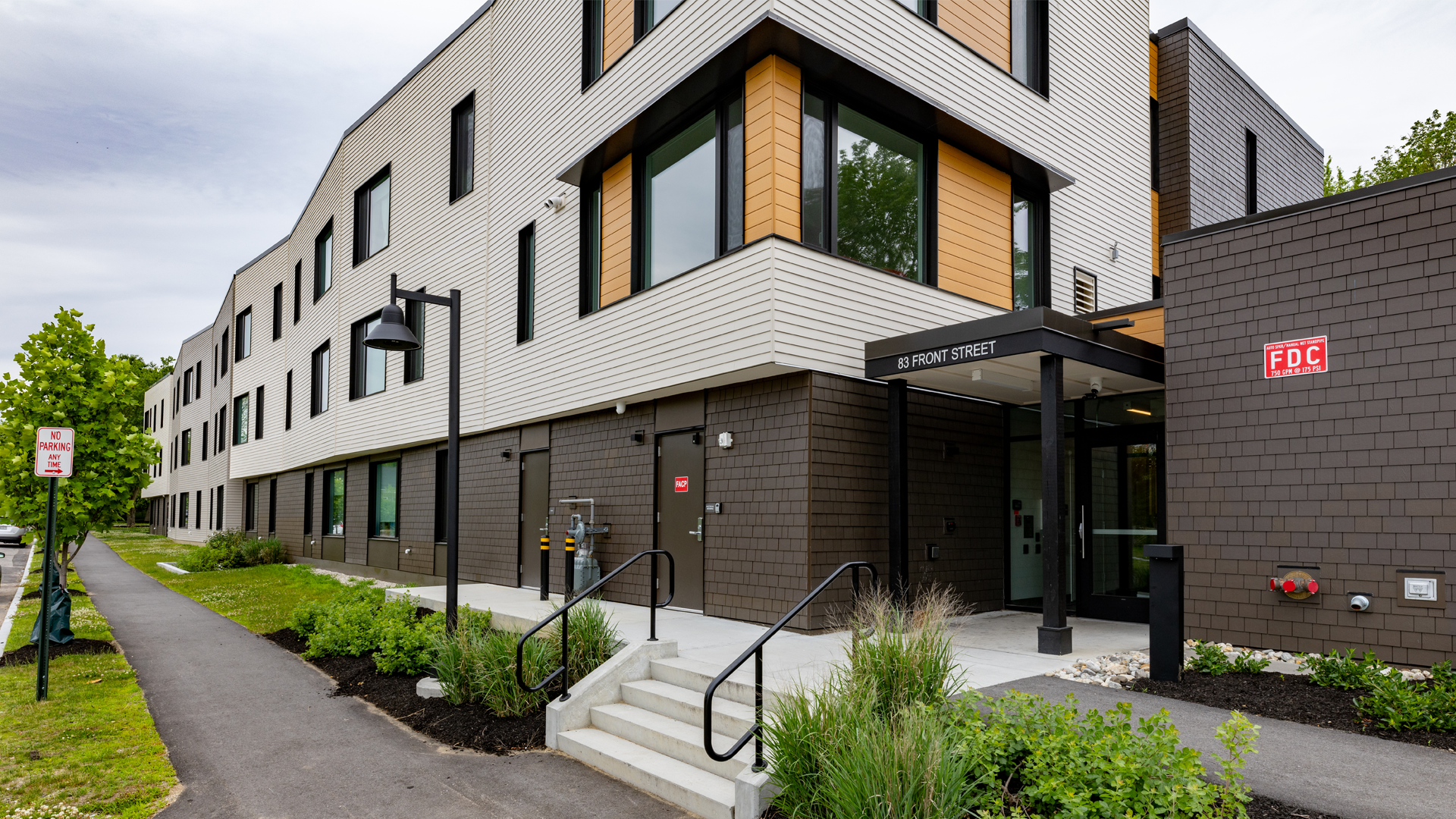
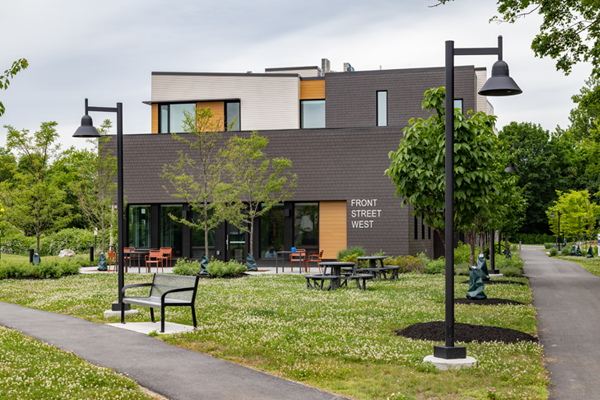
More than 100 new housing units for income-eligible families and seniors were added as part of two development phases in Portland thanks to a partnership between Bath Savings and the Portland Housing Authority.
“Like most parts of New England, Maine is experiencing a pretty severe housing shortage for a variety of reasons,” said Mara Pennell, vice president of commercial lending at Bath Savings.
The arrival of professionals working remotely in Maine communities during the global pandemic contributed to the housing shortage. The increased housing demand put upward pressure on the region’s home prices and rents, explained Pennell.
As part of the first development phase – which involved the replacement of outdated public housing units with a mix of 60 market-rate and affordable apartments – Bath Savings received a $650,000 grant through FHLBank Boston’s Affordable Housing Program (AHP).
For the second phase, Bath Savings was awarded a $650,000 AHP grant but also secured $11.9 million in CDA Extra to help with construction financing for the redevelopment of 83 Front Street, an initiative that replaced obsolete public housing units with 45 affordable one- and two-bedroom apartments for residents who are 55 years old and older.
“Between Phase 1 and Phase 2, we had almost $30 million in construction financing for these projects on a combined basis. As a small community bank, the CDA Extra program provided additional liquidity and helped manage our interest-rate risk during the course of the project,” said Pennell.
The apartments were completed by June 2024 and fully occupied by the end of July of that year.
Roughly 130 miles from Portland, residents of Cedar Falls Mobile Home Park in Bangor can also count themselves among the beneficiaries of CDA.
Bangor Savings Bank accessed $3.6 million in discounted funding through CDA, and another $5.2 million through FHLBank Boston’s CDFI Advance program, to help residents of the Cedar Falls Mobile Home Park purchase their park this past winter. The purchase enabled the residents, nearly 80% of whom earn at or below 80% of the area median income, to preserve all 160 lots in the park as affordable housing.
In Massachusetts, Institution for Savings in Newburyport used CDA Extra to support the renovation and preservation of affordable housing in Ipswich, a coastal town in the northeastern part of the state where the average home price hovers above $800,000 and rents average around $2,400, according to Zillow.
Institution for Savings used $10,662,077 in CDA Extra to purchase Low Income Housing Tax Credits to support the rehabilitation of seven residential properties managed by the Ipswich Housing Authority. The development includes 80 units for lower-income seniors and 14 units for families.
“Affordable housing is one of the drivers of our business. We love when we can find different ways to invest in affordable housing in the communities we serve,” said Robert LeGallo, senior vice president and chief financial officer of Institution for Savings.
Members use CDA to support not only affordable housing rehabilitation and development, but also small business lending.
BankNewport, for example, combined discounted financing through FHLBank Boston’s Jobs for New England program, which provides 0% interest-rate advances to members for affordable small business loans, and a four-year CDA to help the owner of Chomp Kitchen and Drinks add a third restaurant location in Rhode Island.
“When they came to us with their plans for their third location, I knew exactly what would be helpful for their burgeoning group of restaurants and knew they would be a great candidate for the JNE and CDA programs,” said Adam Duclos, vice president of business and commercial lending at BankNewport.