Protects against falling rates
Loading results…
Page 1: Showing 8 out of 52 results
-

Mortgage Portfolio Optimization
In addition to selling new production loans through the Mortgage Partnership Finance® (MPF®) Program, selling seasoned loans can be a useful tool to navigate different risks and adjust the composition of both the asset and liability sides of the balance sheet.
-
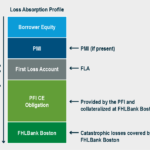
MPF 35 and Credit Risk Sharing
The MPF Program uses a layered credit enhancement structure in which losses are absorbed sequentially by borrower equity, private mortgage insurance (if applicable), the First Loss Account, the PFI’s Credit Enhancement Obligation, and finally FHLBank Boston.
-
Non-Match Funded Strategies for Insurance Companies
The deep menu of FHLBank Boston advance products affords insurance company members the ability to use funding in both strategic and tactical ways.
-

How it Works: Mortgage Partnership Finance® (MPF®) Program
The Mortgage Partnership Finance® (MPF®) Program supports FHLBank Boston members in extending housing financing to their communities. MPF allows members to access liquidity, tailor risk, and focus on their competitive advantage: credit risk in their communities.
-
Inflation Expectations, Interest-Rate Volatility, and Considerations for Funding
Operation Epic Fury in Iran has coincided with a surge in oil price volatility, a widening of Treasury Inflation-Protected Securities (TIPS)-implied breakevens, and an increase in Treasury yields, particularly at the front end of the curve. Depository institutions should review their assumptions about the distribution of interest-rate outcomes this year and consider how they are positioned to perform if interest-rate volatility continues to trend upward. FHLBank Boston can help banks and credit unions maintain funding stability and balance sheet resilience amid rising-rate uncertainty.